
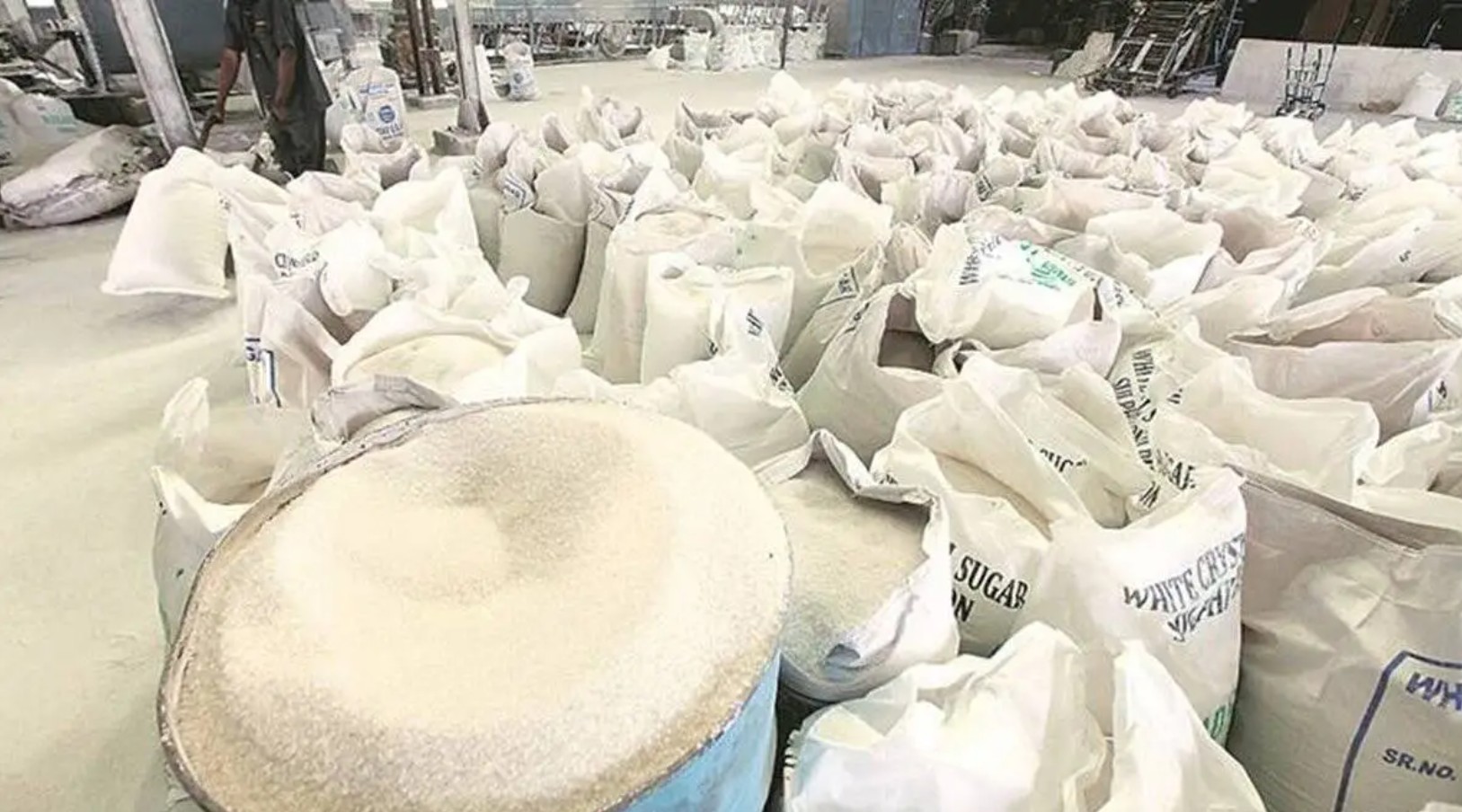

Indian sugar mills and refiners are expected to use only about half of the government’s newly approved duty-free raw sugar import quota, with falling domestic prices making overseas purchases less attractive and the new crushing season approaching.
India’s decision to permit duty-free imports of up to 1 million metric tons of raw sugar was intended to strengthen domestic supplies ahead of the country’s important festival season.
But the policy has not produced the import rush that traders initially expected.
Industry officials and commodity dealers now estimate that Indian mills and refiners may import no more than about 500,000 tons, or roughly half of the permitted quota.
The main reason is straightforward: domestic sugar prices have fallen sharply since the government announced the measure, reducing the margin available to importers.
The development highlights a familiar challenge in agricultural commodity markets. A government can make imports cheaper by removing a tariff, but companies will only bring in the product if the economics make sense.
Domestic Sugar Prices Change the Import Equation
When India announced duty-free raw sugar imports last week, the decision came against a backdrop of exceptionally high domestic sugar prices.
That initially created an attractive opportunity for importers.
Foreign raw sugar could be purchased, shipped to India and processed while still potentially leaving a sufficient margin for refiners and mills.
Since then, however, domestic prices have retreated.
According to the information supplied to The CapTop, Indian ex-mill sugar prices have fallen by nearly 20% from the record high reached last week.
That move has substantially reduced the incentive to purchase overseas sugar.
Rahil Shaikh, managing director of Mumbai-based trader MEIR Commodities India, said imports appeared attractive when domestic prices were firm and rising but became less appealing after the subsequent price decline.
The issue is not simply today’s price.
Importers must also consider where prices will be when cargoes arrive.
Sugar shipments can take weeks to reach India, meaning an importer agreeing to a purchase today could face a very different domestic market when the product is eventually available for sale.
Why Importers May Use Only Half the Quota
The Indian government authorized 1 million metric tons of duty-free raw sugar imports through October 31.
But market participants now expect imports to reach only around 500,000 tons.
Several dealers cited in the supplied market report said most of that volume is likely to be purchased by refiners rather than traditional sugar mills.
That distinction is important because refiners have a different business model.
Port-based sugar refineries can import raw sugar, process it into refined white sugar and then distribute the finished product.
Their ability to process imported raw sugar gives them more flexibility than mills that are primarily dependent on domestically produced sugarcane.
Refiners Could Move Existing Stocks Quickly
India has a relatively small number of port-based sugar refineries capable of processing imported raw sugar.
These facilities could play a central role in meeting near-term domestic demand.
One Mumbai-based dealer at a global trading house estimated that refiners could quickly release around 300,000 tons of sugar stocks already held for the domestic market.
If that inventory estimate proves accurate, it could provide an immediate supply source without requiring the full 1 million-ton import quota to be utilized.
This is another reason the headline quota should not be interpreted as the actual volume of sugar that will enter India.
Government authorization establishes the maximum permitted quantity.
Commercial decisions determine the quantity actually imported.
Mills Face a Different Calculation
For domestic sugar mills, importing raw sugar appears considerably less attractive.
One reason is timing.
India has asked sugar mills to bring forward the start of the new sugarcane crushing season to October 15, potentially increasing domestic sugar availability from the middle of October.
That creates a difficult proposition for mills considering imports.
A company could commit to imported sugar now, pay for transportation and other logistics, and then face increased competition from domestically produced sugar shortly afterward.
If local prices fall further when the new crushing season begins, the economics of those imports could deteriorate even more.
The result is a strong incentive for mills to wait rather than lock themselves into overseas purchases.
Brazil Could Supply Much of the Imported Raw Sugar
India’s import policy allows raw sugar, rather than unrestricted imports of refined white sugar.
That means overseas suppliers must provide raw material that can subsequently be processed before being sold in India’s domestic market.
Brazil is likely to be an important source because it is the world’s largest sugar producer and a major participant in international sugar trade.
Brazil’s importance to the global sugar market means Indian refiners can potentially source significant volumes there when arbitrage opportunities exist.
However, international prices are only one part of the calculation.
Indian importers must also account for freight, insurance, port charges, refining costs, financing expenses, currency movements and the eventual domestic selling price.
A fall in Indian sugar prices can therefore eliminate the import margin even if global raw sugar prices remain attractive.
India’s Festival Season Adds Pressure
The government’s decision to permit duty-free imports was made ahead of India’s major festival period.
Sugar demand typically increases during the festival season because sweets and other traditional foods play a central role in celebrations.
That creates a recurring seasonal increase in demand.
The government therefore faces a balancing act.
It wants sufficient supplies to prevent prices from rising excessively during periods of strong consumption.
But it also does not want an import policy to result in excessive foreign supplies that could put unnecessary pressure on domestic producers.
The latest price decline suggests the market is already responding to expectations of additional supply.
Why the Government Allowed Duty-Free Imports
The duty-free policy was designed primarily as a supply-management measure.
When domestic prices rise sharply, imports can provide an additional source of sugar and help narrow the gap between domestic supply and demand.
Removing import duties reduces the cost of bringing foreign sugar into the country.
In theory, that should make imported sugar more competitive with domestically produced sugar.
But the policy’s effectiveness depends on actual market conditions.
If domestic prices subsequently fall far enough, the tariff advantage may no longer be sufficient to make imports profitable.
That appears to be what is happening now.
Falling Prices Could Change the Policy’s Impact
The nearly 20% decline in domestic ex-mill prices from the recent record is significant.
It changes the incentives facing almost every participant in the sugar market.
For consumers and food manufacturers, lower sugar prices can eventually reduce input costs.
For refiners and traders, however, lower domestic prices can compress margins.
For sugar mills and cane producers, the effect can be more complicated because weaker sugar prices can affect the economics of the entire production chain.
For policymakers, the price decline may reduce the immediate need for the full import quota.
The original objective was to increase availability ahead of a period of potentially strong demand.
If domestic supplies become more plentiful and prices remain below their recent peak, importing the full 1 million tons may no longer be necessary.
The October Crushing Season Could Be Crucial
The timing of the next sugarcane crushing season could ultimately determine how much imported sugar India actually needs.
The government has asked mills to begin crushing as early as October 15.
As mills start processing the new cane crop, domestic sugar supplies should increase.
That could further weaken the incentive to import.
The timing also explains why importers are reluctant to take excessive positions.
A shipment ordered now may arrive around the same period that fresh domestic sugar begins entering the market.
For refiners with existing stocks and established port infrastructure, the risk may be manageable.
For mills that would have to commit to new imports while waiting for domestic production to increase, the calculation is more difficult.
Some Traders Want White Sugar Imports Allowed
The government’s decision currently applies to raw sugar.
At least one market participant quoted in the supplied report argues that India should also permit duty-free imports of white sugar.
The argument is based largely on speed.
Raw sugar must be processed before it can enter the domestic market as refined sugar.
Allowing white sugar imports could potentially provide a faster way to increase available supplies.
That could be particularly useful if domestic prices rise again unexpectedly or if festival demand becomes stronger than anticipated.
However, opening the market more broadly to refined imports would also have consequences for domestic refiners and producers.
Policymakers would therefore need to weigh the benefits of faster supply against the potential impact on local industry.
The Bigger Issue for India’s Sugar Market
India’s sugar market is unusually important because the country is both the world’s largest sugar consumer and one of the world’s major producers.
Government policy therefore has an outsized influence on domestic and international sugar markets.
Changes to import duties, export rules, production incentives and crushing schedules can affect prices well beyond individual mills.
The current situation demonstrates how quickly those policies can interact with market forces.
The government opened the door to 1 million tons of duty-free imports.
The market is now indicating that perhaps only half that amount will actually be economically justified.
That does not mean the policy has failed.
Instead, it shows that the announcement itself can influence expectations and prices even before the full volume of physical sugar arrives.
What Happens Next?
The immediate focus will be on three variables: domestic sugar prices, import economics and the start of the new crushing season.
If domestic prices remain weak, mills are likely to stay away from large-scale imports.
Refiners, particularly those with existing inventories and port infrastructure, could account for most of the imported volume.
If domestic prices rebound sharply before the festival season, however, the import calculation could change again.
That would make the government’s duty-free quota more valuable and could encourage additional purchases.
The timing of actual shipments will therefore be just as important as the announced quota.
The CapTop Take
India’s decision to allow 1 million metric tons of duty-free raw sugar imports was intended to strengthen supplies and help manage prices ahead of the festival season.
But the market has moved quickly.
Domestic sugar prices have fallen almost 20% from last week’s record, making imported sugar less profitable and reducing the incentive for mills to participate.
Dealers now expect actual imports to reach only around 500,000 tons, with refiners likely to account for most of the volume.
The approaching October 15 crushing season adds another layer of uncertainty. As domestic sugarcane processing resumes, local supplies could increase just as imported cargoes begin arriving.
For India, the immediate objective is not simply to maximize imports. It is to ensure sufficient sugar availability without creating unnecessary pressure on domestic producers.
The next several weeks will show whether falling prices have permanently reduced the import opportunity or whether festival demand and changing supply expectations create another opening for overseas sugar.
For global sugar traders, India remains a market worth watching closely. A country of India’s size does not need to use its entire import quota to influence international expectations.