
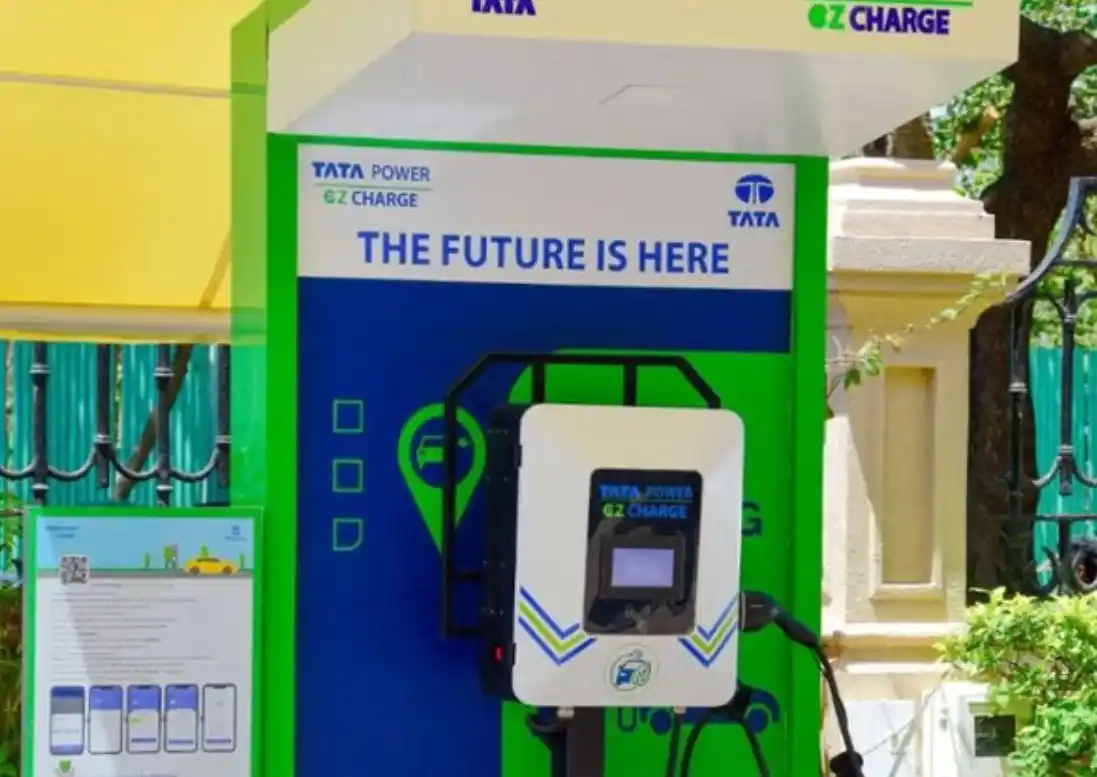

Tata Power has announced a significant milestone for its electric vehicle charging business, revealing that its nationwide charging network has supported more than 414 million green miles and facilitated over 7.5 lakh EV charging sessions across India.
The achievement reflects the rapid growth of electric mobility in the country and highlights the increasing utilization of public charging infrastructure as EV adoption continues to accelerate across multiple vehicle categories.
Expanding EV Charging Footprint Nationwide
According to Tata Power, its public EV charging network now includes more than 5,500 charging points spread across 700+ cities and towns throughout India.
The charging infrastructure covers a wide range of locations, including:
- Major urban centres
- National and state highways
- Corporate workplaces
- Shopping malls and commercial hubs
- Residential communities
- Hospitality destinations
The company says this extensive network is designed to improve charging accessibility for EV owners while supporting long-distance travel and daily commuting requirements.
Over 2.3 Lakh Home Chargers Installed
Beyond public charging infrastructure, Tata Power has also strengthened the residential charging ecosystem.
The company reports that it has installed more than 2.3 lakh home charging units across the country in collaboration with leading automotive manufacturers and electric vehicle OEMs.
Home charging remains a critical component of India’s EV ecosystem, allowing vehicle owners to conveniently recharge their vehicles overnight while reducing dependence on public charging stations for routine usage.
New Charging Stations Added in Key Locations
As part of its ongoing infrastructure expansion strategy, Tata Power has announced the commissioning of several new EV charging facilities in strategically important locations.
Pune
A new charging station has been inaugurated at Kopa Mall, providing additional charging access for EV users in one of Maharashtra’s fastest-growing urban centres.
Ahmedabad–Vadodara Expressway
New charging stations have been installed at Indian Oil Corporation Ltd. (IOCL) locations on both sides of the Ahmedabad–Vadodara Expressway, enhancing charging convenience along one of Gujarat’s busiest highway corridors.
Kolkata
A new charging facility has been launched at a Shapoorji Pallonji Mini Hub in Kolkata. The station will feature six charging guns, helping accommodate higher charging demand in the region.
The company believes these additions will improve charging accessibility in both urban and intercity travel routes.
India’s EV Market Continues to Accelerate
The announcement comes at a time when India’s electric vehicle market is witnessing strong momentum.
According to industry data, domestic EV sales exceeded 2.55 million units during FY2026, marking another record year for the sector.
Growth was observed across all major vehicle categories, including:
- Electric passenger vehicles
- Electric two-wheelers
- Electric three-wheelers
- Electric commercial vehicles
Passenger vehicle sales, in particular, have emerged as a major contributor to the expansion of the country’s electric mobility ecosystem.
Environmental Impact of the Charging Network
Tata Power estimates that charging activity across its network has contributed to a reduction of approximately 50,000 tonnes of tailpipe carbon dioxide (CO₂) emissions.
As more consumers transition from conventional internal-combustion vehicles to electric alternatives, charging infrastructure providers are playing a critical role in supporting cleaner transportation solutions.
The company’s reported environmental benefits align with broader national efforts to reduce emissions and accelerate sustainable mobility adoption.
Tata Power’s Long-Term Sustainability Vision
Part of the Tata Group, Tata Power is among India’s largest integrated power companies. The company currently manages a total operational and pipeline power generation capacity exceeding 26 GW.
Tata Power has outlined an ambitious sustainability roadmap and aims to achieve net-zero emissions by 2045. Expanding EV charging infrastructure remains a key pillar of that strategy, alongside investments in renewable energy and clean energy technologies.
Why Charging Infrastructure Matters
One of the most important factors influencing EV adoption is the availability of reliable charging infrastructure.
A well-distributed charging network offers several benefits:
- Greater confidence for EV buyers
- Reduced range anxiety
- Easier long-distance travel
- Faster adoption of electric mobility
- Support for commercial EV fleets
- Improved charging convenience in urban and rural areas
As India’s EV ecosystem matures, infrastructure expansion will continue to play a crucial role in supporting market growth.
AutIQ Analysis
Tata Power’s milestone of 414 million green miles demonstrates the growing utilization of EV charging infrastructure across India. With more than 5,500 public charging points, 2.3 lakh home chargers, and ongoing investments in strategic locations, the company remains one of the key players supporting the country’s electric mobility transition.
As EV sales continue to rise and government policies encourage cleaner transportation, charging networks like Tata Power’s are expected to become increasingly important in shaping India’s sustainable mobility future.
Source: Tata Power | Edited by AutIQ Editorial Team