
India’s automotive industry is undergoing one of its most significant transformations in decades. While fuel efficiency, affordability, and resale value once dominated purchasing decisions, a new era is emerging—one where safety, connectivity, intelligence, and technology-driven mobility are becoming equally important.
As cities expand, infrastructure improves, and digital technologies reshape transportation, vehicles are evolving from purely mechanical machines into highly sophisticated, software-enabled mobility platforms.
This transition is influencing everything from vehicle design and manufacturing to consumer expectations and regulatory frameworks, creating new opportunities for innovation across the automotive ecosystem.
A New Definition of Mobility
For years, the primary objective of transportation was simple: move people and goods efficiently from one destination to another.
Today, that objective has expanded significantly.
Modern mobility is increasingly measured by:
- Safety performance
- Driver assistance capabilities
- Connectivity features
- Real-time data intelligence
- Sustainability
- User experience
Whether for private consumers, fleet operators, or commercial transportation providers, the quality of the journey is becoming as important as the destination itself.
As India’s highway network expands and urban centers become more interconnected, automotive technologies must evolve to address increasingly complex mobility challenges.
Rising Consumer Focus on Vehicle Safety
One of the most notable shifts in the Indian automotive market is the growing emphasis on safety.
Industry studies indicate that more than 60 percent of new vehicle buyers now consider advanced safety technologies a major factor in purchasing decisions.
This represents a significant change from previous years, when vehicle selection was primarily influenced by:
- Purchase price
- Fuel economy
- Maintenance costs
- Brand reputation
Consumers today are more informed about crash safety ratings, active safety technologies, and driver assistance systems than ever before.
The result is growing demand for vehicles equipped with comprehensive safety packages.
Bharat NCAP Is Raising Industry Standards
Government initiatives are accelerating this transition.
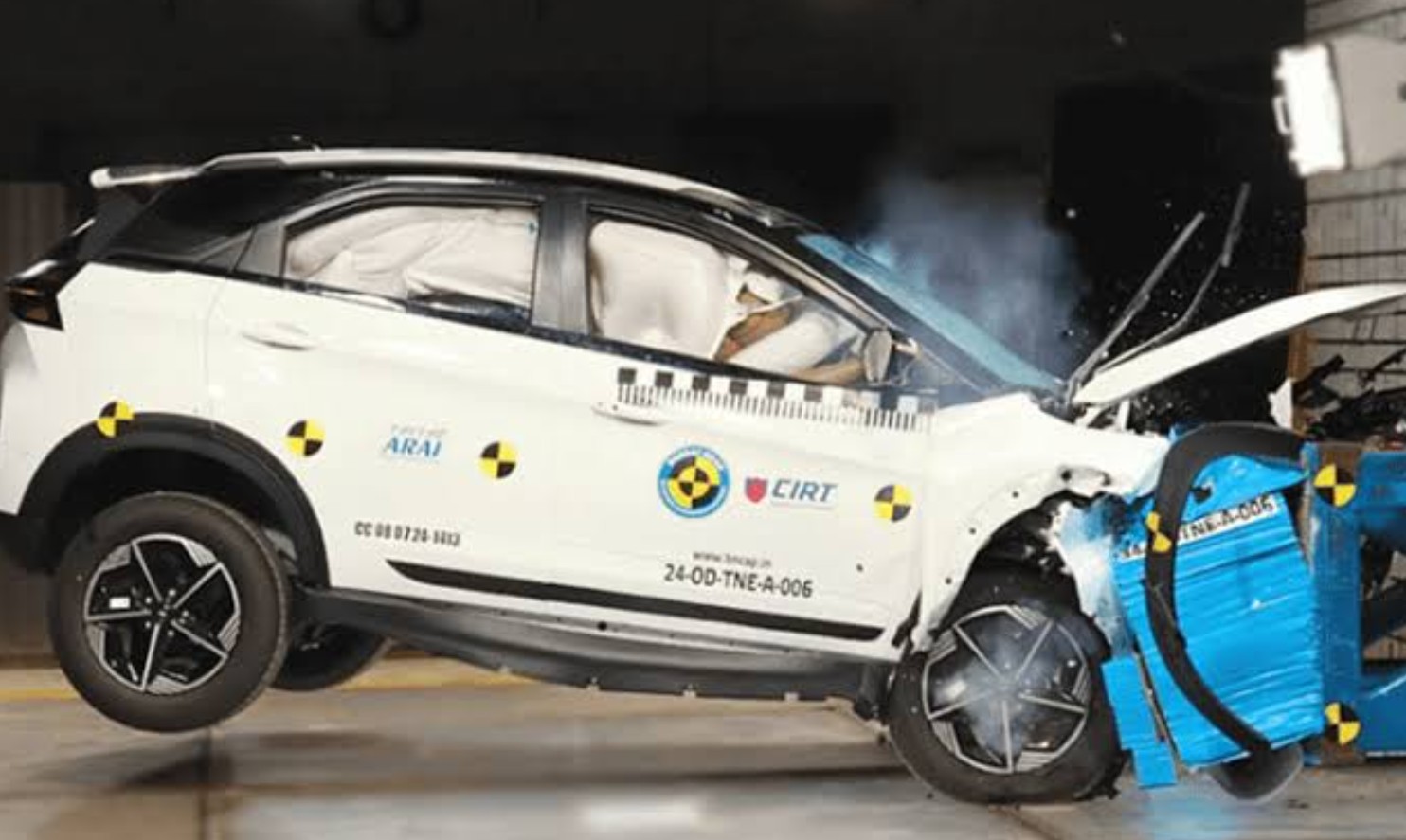
The introduction of the Bharat New Car Assessment Programme (Bharat NCAP) has created a structured framework for evaluating vehicle safety performance within the Indian market.
The program provides:
- Independent crash-testing standards
- Safety performance ratings
- Greater consumer transparency
- Improved manufacturer accountability
By encouraging higher safety benchmarks, Bharat NCAP is helping align India’s automotive standards with leading global markets.
At the same time, the Ministry of Road Transport and Highways (MoRTH) continues to promote advanced safety technologies across passenger and commercial vehicle categories.
From Passive Safety to Active Safety
Historically, automotive safety focused largely on passive protection systems such as:
- Seatbelts
- Airbags
- Reinforced body structures
- Crumple zones
While these technologies remain essential, the industry is increasingly moving toward active safety systems designed to prevent accidents before they occur.
This evolution represents one of the most important technological shifts in modern transportation.
Key Active Safety Technologies
Modern vehicles increasingly feature:
Adaptive Cruise Control (ACC)
Maintains a safe following distance by automatically adjusting vehicle speed.
Automatic Emergency Braking (AEB)
Detects potential collisions and applies braking force when necessary.
Lane Departure Warning
Alerts drivers when the vehicle unintentionally drifts out of its lane.
Blind Spot Monitoring
Provides warnings about vehicles in difficult-to-see areas.
Driver Attention Monitoring
Identifies signs of fatigue or distraction.
Together, these technologies form the foundation of Advanced Driver Assistance Systems (ADAS).
Challenges of Implementing ADAS in India
Although ADAS adoption is increasing, India’s driving environment presents unique challenges.
Factors such as:
- Mixed traffic conditions
- Variable road quality
- Inconsistent lane markings
- Dense urban traffic
- Diverse vehicle types
can complicate the performance of systems originally developed for more structured road networks.
As a result, manufacturers are increasingly investing in localized engineering and software calibration tailored specifically to Indian driving conditions.
This requires extensive testing, sensor optimization, and region-specific development efforts.
The Rise of Connected Vehicles
Beyond safety, connectivity is becoming a defining characteristic of modern mobility.
Today’s vehicles increasingly function as digital platforms capable of collecting, analyzing, and transmitting real-time information.
Connected vehicle technologies support:
- Remote diagnostics
- Vehicle tracking
- Predictive maintenance
- Navigation optimization
- Emergency assistance
- Software updates
Industry data indicates strong growth in connected vehicle adoption, particularly within the electric vehicle segment.
The integration of telematics and cloud-based services is helping create a more intelligent transportation ecosystem.
Electrification and Digital Mobility Are Converging
The growth of electric vehicles is further accelerating the shift toward software-driven mobility.
Unlike conventional automobiles, EVs rely heavily on sophisticated electronic architectures to manage:
- Battery performance
- Charging systems
- Thermal management
- Energy efficiency
- Vehicle diagnostics
This convergence of electrification and connectivity is transforming how vehicles are designed, operated, and maintained.
For fleet operators, these capabilities deliver significant operational benefits, including:
- Reduced downtime
- Improved route planning
- Enhanced driver monitoring
- Better energy utilization
- Lower operating costs
Automotive Electronics: The New Competitive Advantage
As vehicles become smarter, electronics are emerging as one of the industry’s most strategic assets.
Modern automobiles now contain dozens of electronic control units (ECUs), sensors, processors, and communication systems that collectively manage vehicle operations.
These components enable:
- Sensor fusion
- Real-time decision-making
- Connectivity functions
- Safety interventions
- Autonomous driving capabilities
The importance of robust electronic hardware continues to grow as software complexity increases.
Engineering for India’s Unique Conditions
India’s environmental conditions create additional engineering challenges.
Automotive systems must perform reliably across:
- Extreme summer temperatures
- Heavy monsoon conditions
- High humidity levels
- Dust-intensive environments
- Voltage fluctuations
Standard consumer-grade electronics are often insufficient for these demanding conditions.
As a result, manufacturers are increasingly investing in:
- Automotive-grade electronic components
- Ruggedized circuit boards
- Enhanced thermal management systems
- High-durability sensor platforms
Reliability remains critical, particularly as vehicles become more dependent on electronic systems for safety and performance.
Local Manufacturing and Innovation Gain Momentum
Government initiatives such as the Production Linked Incentive (PLI) Scheme are helping accelerate domestic innovation in automotive technology.
The focus is gradually shifting from simple assembly operations toward:
- Product engineering
- Component design
- Electronics manufacturing
- Software development
- Advanced mobility solutions
This evolution strengthens India’s position within the global automotive value chain while supporting long-term industrial growth.
The Road Ahead
India’s automotive industry is entering a period where innovation will increasingly determine competitiveness.
Future success will depend on the ability to combine:
- Advanced software
- Reliable hardware
- Intelligent safety systems
- Connected mobility services
- Sustainable transportation technologies
The next generation of vehicles will be defined not only by horsepower or fuel efficiency but also by their ability to think, communicate, and adapt in real time.
AutIQ Analysis
India’s mobility landscape is rapidly evolving from a traditional automotive market into a technology-driven ecosystem centered on safety, connectivity, and intelligence. As consumers demand smarter vehicles and regulators push for higher safety standards, innovation is becoming the industry’s primary growth engine.
The companies that successfully integrate advanced electronics, localized engineering, connected technologies, and robust safety systems will be best positioned to lead the next chapter of India’s automotive transformation.
The future of mobility will not simply be electric—it will be connected, intelligent, and increasingly defined by the technology operating beneath the surface.
Source: Industry Analysis | Edited by AutIQ Editorial Team