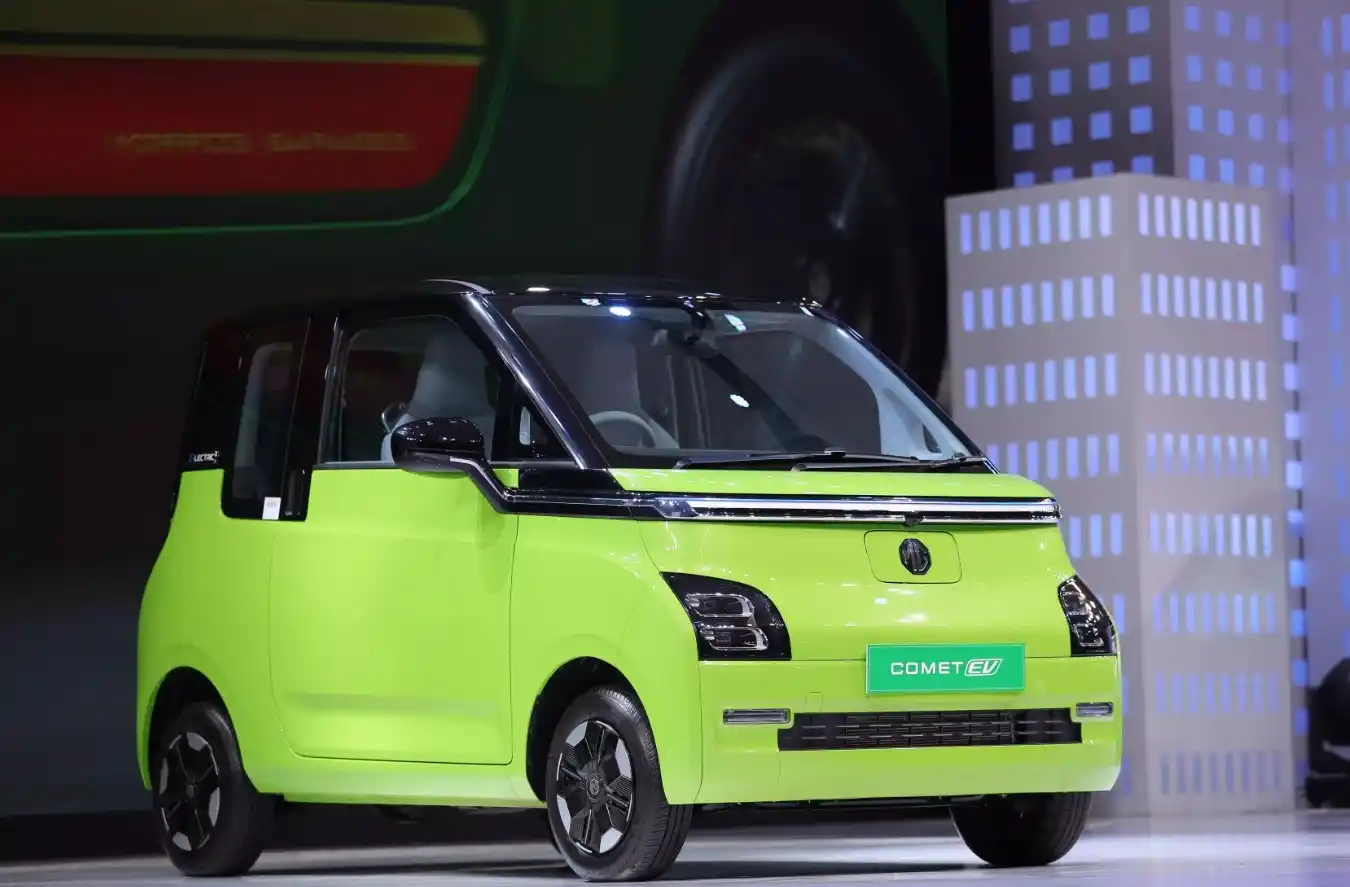

The MG Comet EV is positioning itself as one of the most distinctive urban electric vehicles in India. Designed specifically for congested city environments, it challenges traditional expectations of what a compact car should offer by combining futuristic design, connected technology, and low-cost electric mobility.
Its compact footprint, unique two-door layout, and modern styling make it instantly recognizable on busy urban roads.
Battery and Range Designed for Daily Urban Use
At the core of the Comet EV is a 17.3 kWh prismatic lithium-ion battery, engineered for thermal stability and durability—important factors for Indian driving conditions.
Key performance figures include:
- ARAI-certified range: 230 km (single charge)
- Battery type: Prismatic lithium-ion
- Focus: City commuting efficiency and reliability
This range is optimized for daily use cases such as office commutes, short intercity trips, and routine urban driving rather than long-distance travel.
Performance Built for City Driving
The Comet EV is powered by a compact electric motor designed for smooth, predictable urban performance:
- Power output: 41.4 bhp
- Torque: 110 Nm
- Drive characteristics: Instant torque delivery typical of EVs
While not performance-focused, the setup prioritizes ease of driving, especially in stop-and-go traffic conditions common in Indian cities.
Tech-Focused Interior with Connected Features
Despite its compact size, the MG Comet EV places strong emphasis on in-cabin technology.
Highlights include:
- MG iSmart connected car platform
- Over 55 connected features
- More than 100 voice commands
- Dual-screen layout with floating design
- 10.25-inch touchscreen infotainment system
- Wireless Android Auto and Apple CarPlay
The cabin is designed to feel modern and digitally integrated, offering a user experience typically associated with higher vehicle segments.
Battery-as-a-Service (BaaS): A Different Ownership Model
One of the most notable innovations introduced with the Comet EV is MG’s Battery-as-a-Service (BaaS) program.
This model separates battery ownership from the vehicle purchase, offering:
- Lower upfront vehicle cost
- Pay-per-kilometre battery usage structure
- Reduced entry barrier for EV buyers
Additionally, MG offers an assured 60% buyback value after three years, which improves long-term ownership confidence.
This structure makes the Comet EV particularly attractive for first-time EV buyers and urban commuters.
Running Cost Advantage in Real Use
For users driving approximately 1,200 km per month, the Comet EV can offer substantial cost advantages compared to petrol-powered city cars.
Key benefits include:
- Lower per-kilometre energy cost vs fuel
- Reduced maintenance requirements
- Predictable monthly operating expenses
This positions the Comet EV as a cost-efficient solution for high-frequency urban usage.
Urban Design Philosophy
The Comet EV is not designed to compete with traditional hatchbacks or SUVs.
Instead, it focuses on:
- Maximum maneuverability in tight city streets
- Easy parking in congested areas
- Lightweight, efficient urban mobility
- Distinctive futuristic styling
Its compact two-door layout further reinforces its role as a dedicated city-focused vehicle.
Final Verdict
The MG Comet EV represents a clear shift in how urban mobility is being redefined in India.
Rather than competing on size or performance, it focuses on efficiency, affordability, and digital integration. Its combination of compact design, smart connectivity, and innovative ownership structure makes it one of the most purpose-built city EVs currently available.
For urban drivers seeking a practical, low-cost, and technology-driven commuting solution, the Comet EV offers a compelling and forward-looking package.