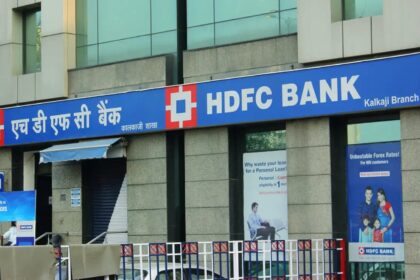
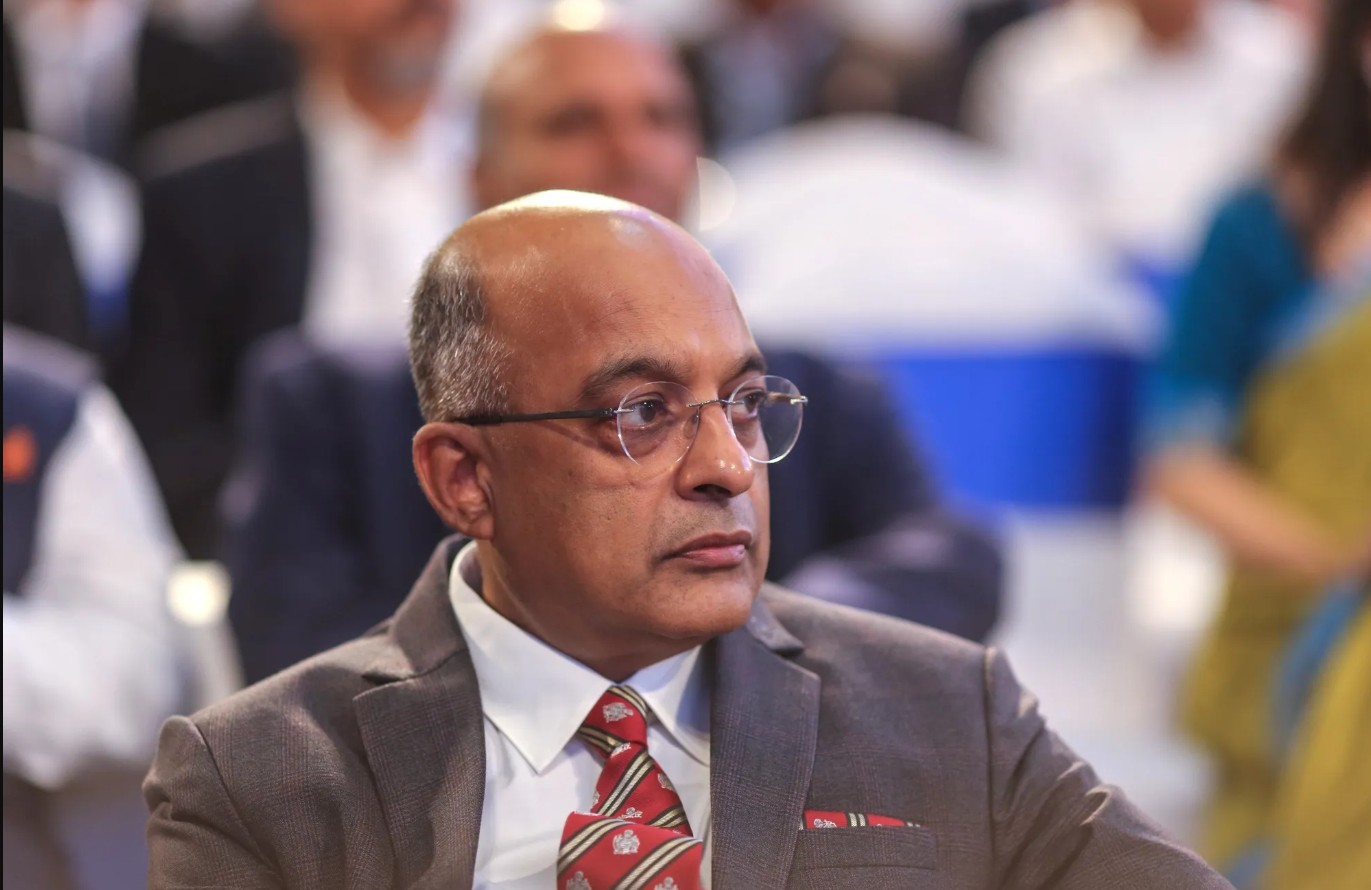

HDFC Bank shares initially climbed after CEO Sashidhar Jagdishan announced that he would not seek reappointment, as investors shifted their attention to the lender’s succession plan and the possibility of a leadership-driven re-rating.
Shares of HDFC Bank, India’s largest private-sector lender, opened higher after Chief Executive Officer Sashidhar Jagdishan made the unexpected decision not to seek reappointment when his current term ends in October.
The stock rose about 2.5% in early trading before giving back part of those gains, as investors assessed what the leadership transition could mean for one of India’s most important banking institutions.
The immediate market reaction highlighted a complex situation for shareholders. On one hand, Jagdishan’s departure introduces a new period of uncertainty at a time when the bank is already under scrutiny over growth, profitability and governance. On the other, several analysts believe that the appointment of a credible successor could create an opportunity to reset investor expectations.
For HDFC Bank, the central question is now no longer whether Jagdishan will continue beyond his current term.
It is: Who will lead the bank next, and can the new leadership accelerate growth and rebuild investor confidence?
The succession decision comes after a difficult year for HDFC Bank shares. According to market data cited by analysts, the lender’s stock has fallen sharply since the beginning of 2026, underperforming the broader benchmark Nifty 50.
That decline means the incoming CEO will take charge of a banking giant with substantial scale, but also with significant expectations.
HDFC Bank Moves to Fast-Track CEO Selection
In its announcement, HDFC Bank said Jagdishan had reiterated his decision not to seek reappointment despite efforts to persuade him otherwise.
The lender said it would fast-track the process of selecting and appointing his successor.
A swift succession process could be important for investor confidence.
Large financial institutions tend to face particularly close scrutiny during leadership transitions because management continuity, regulatory confidence and strategic direction can all affect market sentiment.
Analysts have already indicated that uncertainty surrounding the successor could keep the stock under pressure in the near term.
At the same time, an appointment that investors view as credible and strategically strong could become a catalyst for a reassessment of the bank’s valuation.
That is why the profile of the next CEO has become central to the investment debate around HDFC Bank.
Analysts See Re-Rating Potential in the Right Successor
Nomura has said that the incoming chief executive will face a significant list of priorities.
According to the brokerage, the next CEO will need to focus on accelerating growth, improving deposit mobilisation, strengthening returns and restoring confidence around governance and senior-management stability.
The challenge is substantial, but analysts also see opportunity.
Nomura said that a credible successor could potentially act as a meaningful re-rating catalyst for the stock. However, it expects near-term pressure to remain until there is greater clarity on the next CEO and the strategic direction of the bank.
The possibility of a re-rating matters because HDFC Bank’s stock has been under considerable pressure in 2026.
According to LSEG data cited in recent market reports, the bank’s shares had fallen roughly 27% since the beginning of the year, compared with an approximately 8% decline in the benchmark Nifty 50.
The sharp underperformance has increased pressure on the bank’s next leadership team to deliver a clearer path to stronger financial performance.
Kaizad Bharucha Emerges as Key Internal Candidate
Kaizad Bharucha, HDFC Bank’s Deputy Managing Director, has emerged as one of the key names being discussed as a possible successor to Jagdishan.
Citi and Jefferies have identified Bharucha as the leading internal candidate in their research reports.
However, no final appointment has been officially announced.
Reports have also identified several other potential names in the wider succession conversation. Jefferies has reportedly mentioned Anup Bagchi, CEO of ICICI Prudential Life Insurance; Paresh Sukthankar, a former Deputy Managing Director at HDFC Bank; Vibha Padalkar, CEO of HDFC Life; and Amitabh Chaudhry, CEO of Axis Bank.
These names remain part of analyst and market speculation unless and until formally confirmed by the relevant institutions.
The eventual choice will be closely watched because the bank’s leadership transition comes at a strategically important point in its history.
An internal candidate could offer operational continuity and familiarity with HDFC Bank’s systems and strategy.
An external candidate, meanwhile, could potentially bring a different management approach and signal a broader reset.
Either way, investors will be looking beyond the individual’s name.
They will also want to understand the new CEO’s strategy.
A Difficult Year for HDFC Bank Shares
The leadership transition comes after a period of significant pressure on the stock.
HDFC Bank has traditionally been one of the most closely tracked banking companies in India, with a large institutional shareholder base and substantial exposure to both domestic and international investors.
Its underperformance this year has therefore attracted considerable attention.
The bank’s valuation has become a central issue in the market debate.
Jefferies, which continues to maintain a positive view on the stock, has argued that uncertainty surrounding leadership can increase the cost of equity and place pressure on valuations.
However, following the significant correction in the share price, the brokerage said the risk-reward equation had become more balanced at the valuation levels it was assessing.
For investors, this creates two competing considerations.
The first is uncertainty.
A change in leadership at the country’s largest private-sector lender naturally raises questions about continuity and strategic execution.
The second is opportunity.
If the new CEO can provide a convincing growth strategy and demonstrate an ability to improve returns, the market could reassess the bank’s long-term outlook.
Governance Concerns Remain Part of the Story
The leadership transition is also taking place against the backdrop of governance-related concerns earlier in the year.
In March, HDFC Bank’s part-time chairman Atanu Chakraborty resigned after raising concerns related to governance and ethics within the institution.
The development created an additional layer of scrutiny around the bank’s leadership and internal processes.
For investors, governance issues are especially important in banking.
Unlike many other businesses, banks depend heavily on confidence. Depositors, shareholders, regulators and institutional counterparties all place significant value on strong governance structures and management stability.
The incoming CEO will therefore face the task of addressing not only operational and financial priorities but also the broader perception of the institution.
Restoring confidence around senior-management stability is likely to be an important part of the next leadership team’s mandate.
The HDFC Merger Remains Central to the Bank’s Future
One of the defining achievements of Jagdishan’s tenure was the completion of HDFC Bank’s merger with HDFC Ltd.
The approximately $40 billion transaction brought together HDFC Bank and the country’s largest mortgage lender, creating a financial-services institution of unprecedented scale in India.
The transaction was historic.
But the scale of the merger also means that investors continue to watch for the full realisation of the expected synergies.
Analysts have pointed out that some of those benefits have yet to be fully reflected in the bank’s financial performance.
The next CEO will therefore inherit the responsibility of taking the post-merger institution into its next stage of development.
That could include improving the bank’s ability to generate deposits, strengthening margins, increasing returns on assets and capturing opportunities created by the larger combined platform.
Citi has argued that the incoming CEO will need to demonstrate the strategic capability to provide a credible path toward stronger net interest margins, improved return on assets and decisive growth supported by market-share gains.
Those metrics will be closely watched.
What the New CEO Must Deliver
The next chief executive will inherit one of India’s most powerful banking franchises.
But size alone will not be enough to satisfy investors.
The new leadership is likely to be judged on its ability to deliver progress across several major areas.
Accelerating Growth
The bank will need to demonstrate that its enormous scale can translate into sustainable and competitive growth.
Improving Deposit Mobilisation
Deposits are central to a bank’s ability to support lending growth and manage funding costs. Strengthening deposit mobilisation is therefore likely to remain a major strategic priority.
Supporting Net Interest Margins
Investors will be watching how the bank manages funding costs and lending yields in its efforts to protect and improve net interest margins.
Increasing Returns
Improved return on assets and stronger returns for shareholders are likely to be key expectations for the incoming CEO.
Realising Merger Synergies
The HDFC Ltd merger created significant potential. The next stage will involve demonstrating that the larger combined organisation can deliver those expected benefits over time.
Restoring Confidence
The new CEO will also need to communicate a convincing vision for management stability, governance and long-term strategy.
Why the Succession Process Matters So Much
Leadership changes can have an outsized impact on banking stocks because the chief executive is directly associated with capital allocation, growth strategy, risk management and corporate culture.
HDFC Bank’s next CEO will therefore be more than a replacement for Jagdishan.
The appointment could influence how investors think about the institution’s future.
A smooth and timely transition could help reduce uncertainty.
A highly regarded successor with a clear strategic plan could potentially provide a positive catalyst.
However, a prolonged selection process could extend the uncertainty currently weighing on sentiment.
The bank’s decision to fast-track the process suggests that management recognises the importance of resolving the succession question quickly.
Investors Await the Next Major Announcement
The initial rise in HDFC Bank shares showed that investors are already considering the possibility that the leadership change could create an opportunity for a fresh start.
However, the stock’s movement after opening also demonstrated the market’s caution.
Until a successor is formally announced, uncertainty remains.
The next major development will be the bank’s official decision on its new chief executive.
Investors will then focus on several critical questions:
- Who has been chosen to lead HDFC Bank?
- Is the successor an internal or external appointment?
- What experience does the new CEO bring?
- What will be the leadership team’s immediate priorities?
- How will the bank accelerate growth?
- What is the plan for improving profitability and returns?
- How will management address investor concerns about governance and stability?
- When will the full benefits of the HDFC Ltd merger become more visible?
The Bottom Line
HDFC Bank’s CEO transition has created a pivotal moment for India’s largest private-sector lender.
Sashidhar Jagdishan’s decision not to seek reappointment initially surprised the market, but it has also opened the possibility of a broader strategic reset.
The bank’s shares have faced substantial pressure in 2026, underperforming the broader market. At the same time, the institution remains one of the most significant and influential financial franchises in India.
The next CEO will inherit both the advantages of scale and the challenges of high expectations.
For shareholders, the succession process now represents the next major catalyst.
A credible, timely appointment and a clear strategy to improve growth, deposits, margins and returns could help reshape the investment narrative.
Until then, HDFC Bank’s leadership transition is likely to remain one of the most closely watched developments in India’s banking and financial markets.