
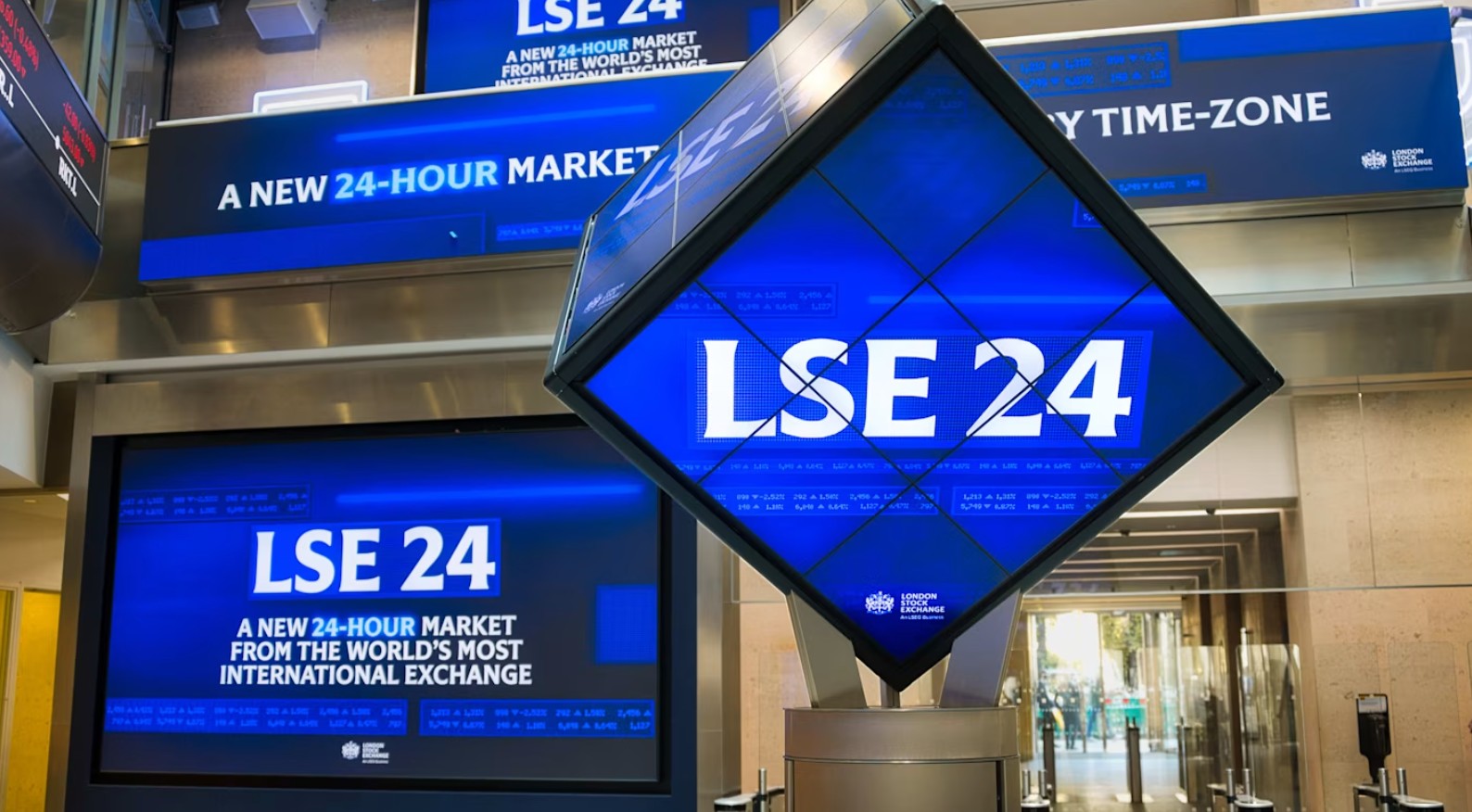

London: The London Stock Exchange (LSE) is preparing to introduce a new overnight trading platform in 2027, marking a major shift in traditional stock market operations as global exchanges compete to meet growing demand for flexible, around-the-clock investment access.
The new venue will allow investors to trade outside conventional market hours and will initially focus on exchange-traded products (ETPs), including funds tracking major UK and US markets.
The move reflects a broader transformation in financial markets, where retail investors increasingly expect instant access to investment opportunities similar to the experience offered by cryptocurrency platforms operating continuously throughout the week.
New Overnight Trading Venue to Begin in 2027
The London Stock Exchange announced that the separate trading venue is expected to launch during the first half of 2027.
Unlike the existing LSE market, which operates during standard business hours, the new platform will provide extended access during evening and overnight periods.
The proposed schedule includes:
- Main LSE market hours: 8:00 AM to 4:30 PM
- New overnight venue: 5:00 PM to 7:50 AM
- Daily processing break: 6:30 PM to 7:00 PM
The exchange said the extended session will initially focus on exchange-traded products before potentially expanding to other securities.
LSE Targets Growing Global Retail Demand
Julia Hoggett, Chief Executive Officer of the London Stock Exchange, said the initiative builds on London’s role as a global financial centre.
She highlighted that investors increasingly want the ability to trade according to their own schedules rather than being restricted by traditional exchange hours.
According to the LSE, the platform could be particularly attractive for international retail investors, including those in Asian markets who want convenient access to UK and global assets during their local trading hours.
The exchange believes London’s time zone provides a strategic advantage by connecting investors across different regions.
Competition With Crypto and Digital Trading Platforms
The decision comes as traditional exchanges face increasing competition from digital asset platforms that offer continuous trading.
Cryptocurrency exchanges such as Coinbase and Kraken have popularised 24/7 market access, attracting younger investors who prefer mobile-first investing experiences.
Industry executives say crypto markets have changed expectations among retail traders, who now want immediate reactions to:
- Breaking news
- Economic announcements
- Corporate developments
- Global market movements
Elad Lavi, Vice-President of Development Strategy at retail brokerage eToro, said investors increasingly expect markets to be accessible whenever they want to participate.
Global Exchanges Expanding Trading Hours
The LSE’s move follows similar initiatives from major US exchanges.
Several American market operators, including:
- Nasdaq
- New York Stock Exchange (NYSE)
- Cboe Global Markets
have explored or announced plans to extend trading hours, subject to regulatory approvals.
The expansion reflects a wider industry trend toward creating more flexible and technology-driven financial markets.
Institutional Investors Remain Cautious
While retail investors are driving demand for longer trading hours, institutional market participants have shown a more measured response.
The World Federation of Exchanges (WFE) has previously noted that retail investors, particularly in the Asia-Pacific region, show stronger interest in extended trading access compared with many institutional investors.
Some market organisations have questioned whether continuous trading models are suitable for all securities.
Concerns include:
- Lower liquidity during overnight sessions
- Wider bid-ask spreads
- Increased market volatility
- Operational challenges
- Regulatory complexity
The Federation of European Securities Exchanges has also said that the long-term sustainability and benefits of extended trading models remain uncertain.
Exchange-Traded Products First, Stocks Later
The LSE said it will initially focus on more than 2,600 exchange-traded products already listed on its platform.
Starting with ETPs is considered simpler because individual company shares involve additional challenges, including:
- Corporate announcements
- Market disclosures
- Regulatory requirements
- Company participation
LSE executives said extending trading hours for individual equities requires further consideration.
Artificial Intelligence Trading Tools to Be Included
The new platform is also expected to incorporate advanced technology capabilities, including support for agentic artificial intelligence tools.
Simon McQuoid-Mason, Head of New Product and Market Structure and Equities at the LSE, said AI-driven tools are increasingly being adopted for:
- Portfolio analysis
- Market assessment
- Investment strategy adjustments
- Trading decisions
The exchange believes building AI capabilities into the new trading environment will support the future evolution of financial markets.
What This Means for Investors
The introduction of extended trading hours could change how investors interact with global markets.
Potential benefits include:
- Greater flexibility for international investors
- Faster reaction to global events
- Improved access for different time zones
- More investment opportunities outside traditional sessions
However, investors may also face challenges such as reduced liquidity during certain periods and potentially higher price volatility.
Outlook: London Moves Toward a New Era of Market Access
The London Stock Exchange’s planned overnight trading platform represents a significant step in the evolution of global financial markets.
As investors become increasingly accustomed to instant digital access, traditional exchanges are adapting their models to remain competitive.
The success of the initiative will depend on investor participation, liquidity levels, regulatory approval, and whether extended trading provides meaningful advantages over existing market structures.
With major exchanges worldwide exploring longer trading hours, the financial industry appears to be moving toward a more flexible and technology-driven future.