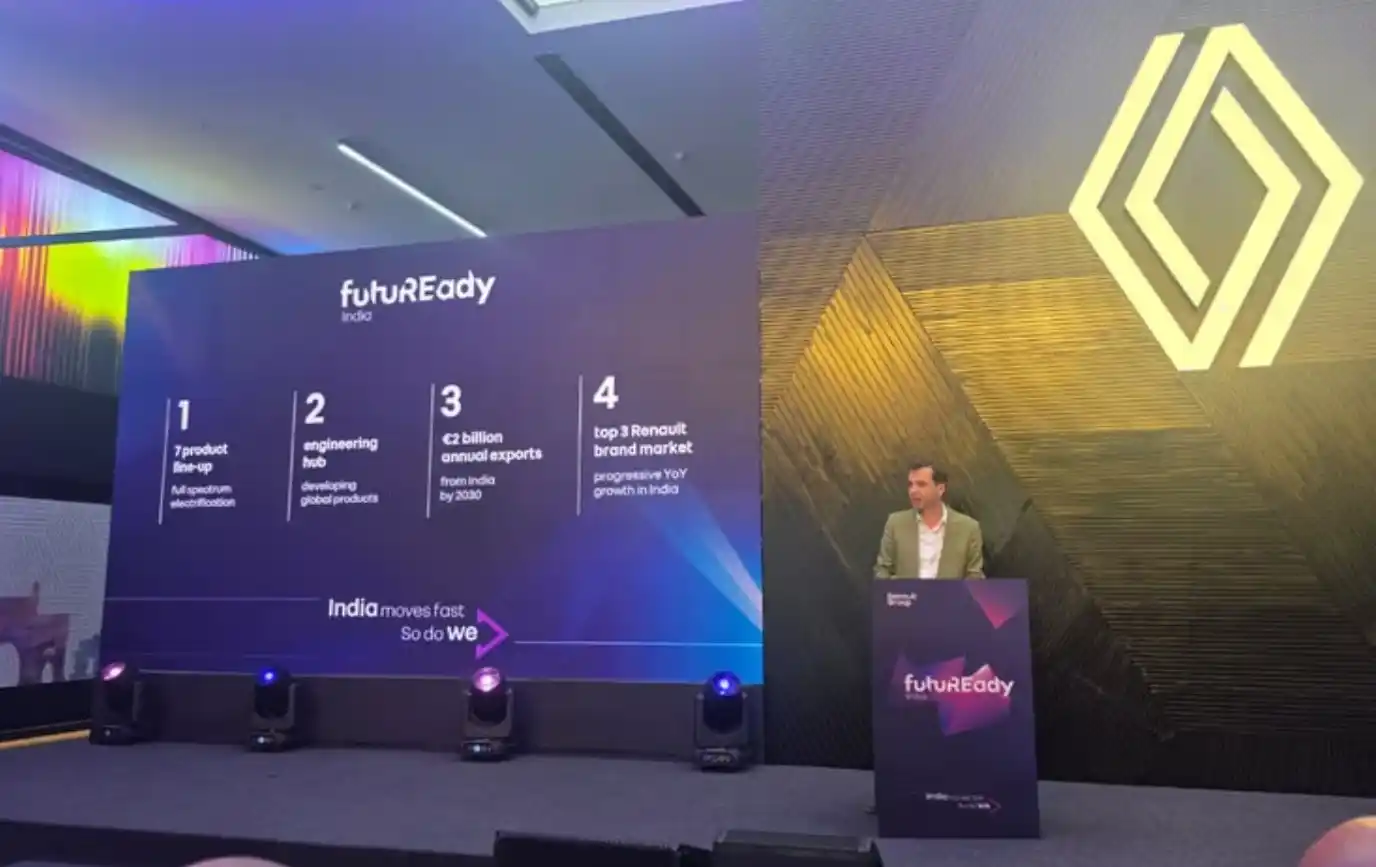

Renault India is preparing one of its most ambitious product offensives in the country, combining conventional petrol engines with CNG, hybrid, and electric powertrains under its newly unveiled FuturEReady 2030 strategy.
In an interaction with industry media, Stéphane Deblaise, CEO of Renault Group India, outlined the company’s roadmap to introduce seven new models while significantly expanding its powertrain offerings to meet evolving customer preferences in India.
The strategy reflects Renault’s belief that Indian buyers will continue to demand multiple propulsion technologies rather than shifting entirely toward a single solution.
Renault’s Multi-Powertrain Vision for India
According to Deblaise, India’s automotive market remains unique due to its diverse customer requirements.
Consumers continue to seek a variety of options, including:
- Petrol vehicles
- CNG-powered cars
- Hybrid models
- Electric vehicles (EVs)
To address this broad demand spectrum, Renault plans to leverage its upcoming vehicle platforms to support multiple powertrain configurations.
The company believes flexibility will be crucial as the Indian market transitions toward cleaner mobility solutions over the coming decade.
Renault CNG Models Arriving Within Months
One of the most immediate developments in Renault’s product strategy is the launch of factory-developed CNG variants, which the company says are only months away.
Deblaise confirmed that development is already at an advanced stage, with:
- Road testing underway
- Crash testing in progress
- Engineering validation nearing completion
Dual-Cylinder CNG Technology
Renault plans to introduce a dual-cylinder CNG system designed to maximize practicality.
Unlike conventional CNG installations that often reduce luggage space, Renault’s solution places the gas cylinders beneath the vehicle floor.
This design offers several advantages:
- Full boot capacity remains available
- Improved cargo flexibility
- Enhanced practicality for families
- Better suitability for taxi and fleet operators
The company believes this packaging solution could become a significant differentiator in the growing CNG segment, which currently accounts for approximately 22 percent of India’s passenger vehicle market.
Likely to Debut on Triber and Kiger
While Renault has not officially confirmed individual model applications, comments from the CEO strongly suggest that the dual-cylinder CNG system will be introduced on both:
Renault Triber
The compact MPV remains one of Renault’s most practical offerings and could benefit significantly from preserved luggage capacity.
Renault Kiger
Industry observers expect the compact SUV to receive the same technology as part of Renault’s broader CNG strategy.
The powertrain is expected to utilize Renault’s 1.0-litre turbocharged petrol engine, although complete technical specifications have yet to be disclosed.
Duster and Bridger to Support Multiple Powertrains
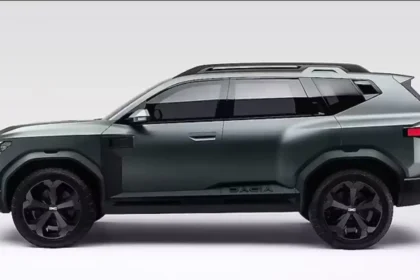
Renault’s upcoming RGMP platform, which will underpin the next-generation Duster and the upcoming Bridger, has been engineered to support a wide range of propulsion technologies.
According to Deblaise, the platform will accommodate:
- Petrol engines
- CNG systems
- Hybrid powertrains
- Battery-electric drivetrains
This flexibility will allow Renault to adapt product offerings based on market demand and evolving regulatory requirements.
The strategy also aligns with broader industry trends toward modular vehicle architectures capable of supporting multiple energy sources.
Renault EV Launch Timeline Revealed
Renault has also provided fresh clarity on its electric vehicle roadmap for India.
The company confirmed that its first locally relevant EV is expected to arrive several months after the winter launch planned for late 2027, effectively pointing toward a 2028 market introduction.
While specific models remain undisclosed, Renault indicated that it does not intend to delay EV launches while waiting for complete localization of battery manufacturing.
Localisation Plans
The company continues to pursue an ambitious localisation strategy targeting approximately 90 percent local content.
However, Renault acknowledged that battery cells will initially need to be imported until large-scale domestic cell production becomes available.
Deblaise stated that Renault intends to introduce EVs when market conditions are appropriate and gradually increase localization levels as India’s battery ecosystem matures.
Growing EV Awareness Benefits Future Demand
When asked about rising geopolitical tensions and their effect on EV demand, Deblaise suggested that temporary external factors do not directly shape Renault’s long-term product decisions.
However, he acknowledged that increasing fuel-price concerns can help consumers better understand the benefits of electric mobility.
According to Renault, such developments may contribute to greater acceptance of EV technology over time, even if immediate purchasing decisions remain influenced by multiple factors.
Duster Generates Positive Early Feedback
Renault also expressed confidence in the market response to the returning Duster.
Although customer deliveries are still in the early stages, the company reports encouraging feedback regarding:
- Ride quality
- Handling characteristics
- Turbocharged engine performance
- Exterior design
The Duster remains one of Renault’s most recognized global nameplates and is expected to play a central role in the brand’s future India growth strategy.
Managing Supply Chain Challenges
The company is also monitoring ongoing global geopolitical developments that could impact automotive supply chains.
Renault has implemented proactive measures to minimize disruptions, including:
- Alternative sourcing strategies
- Energy consumption adjustments at manufacturing facilities
- Increased supplier coordination
- Contingency planning for logistics operations
According to the company, no significant supply disruptions have occurred so far, although management continues to monitor the situation closely.
Seven New Models Planned Under FuturEReady 2030
The broader FuturEReady 2030 strategy will see Renault significantly expand its Indian portfolio.
Key pillars of the plan include:
Product Expansion
- Seven new models planned
- New SUVs and crossover vehicles
- Expanded powertrain choices
Technology Diversification
- Petrol engines
- CNG vehicles
- Hybrid technology
- Battery-electric vehicles
Local Manufacturing
- High localization levels
- Greater supplier integration
- Enhanced production efficiency
Future Mobility
- Connected vehicle technologies
- Improved safety systems
- Sustainable transportation solutions
AutIQ Analysis
Renault’s latest roadmap highlights a pragmatic approach to India’s rapidly evolving automotive landscape. Rather than betting exclusively on a single technology, the company is pursuing a diversified strategy that recognizes the continued importance of petrol, the growing popularity of CNG, the emergence of hybrids, and the long-term potential of electric mobility.
With CNG models expected within months, new-generation Duster and Bridger SUVs on the horizon, and EVs targeted for 2028, Renault appears determined to strengthen its position in one of the world’s most competitive automotive markets.
The success of the FuturEReady 2030 strategy will ultimately depend on execution, localization, and the company’s ability to deliver products that align with India’s increasingly diverse mobility needs.
Source: Renault Group India Leadership Interaction | Edited by AutIQ Editorial Team