
The airline reportedly plans higher guaranteed pay coverage and at least 42 days of annual leave as it expands its aircraft fleet and route network.
Akasa Air plans to increase pilot salaries by up to 20% from January 1, 2027, alongside changes to guaranteed monthly pay and annual leave, according to a PTI report citing sources.
The proposed package covers fixed salaries and hourly payments. Under the standard work pattern, minimum protected flying hours would increase to 50 a month, while minimum annual leave entitlement would rise to 42 days. Akasa had not commented at the time of PTI’s report.
The changes come as the airline adds aircraft and routes, placing crew availability and roster planning alongside its expansion ambitions.
What the reported changes include
| Component | Reported revision |
|---|---|
| Effective date | January 1, 2027 |
| Pilot compensation | Increases of up to 20%, according to PTI |
| Protected flying hours | 50 per month under the standard work pattern |
| Minimum annual leave | 42 days |
| Work arrangements | Additional flexible roster options |
| Other benefits | Loyalty rewards and the previously announced Long-Term Incentive Plan |
The maximum reported increase should not be read as a uniform 20% raise for every pilot. The available information does not establish individual entitlements across ranks, contracts and work patterns.
A separate Economic Times report, citing an internal memo, described fixed-salary increases of up to 15%. The reports may be measuring different compensation components, but the available evidence does not establish a definitive reconciliation.
Protected flying hours are a pay guarantee
The increase to 50 protected hours concerns the minimum flying-hour payment covered by the compensation arrangement, subject to its terms.
It does not mean every pilot must fly exactly 50 hours each month. Nor does it describe the maximum number of hours a pilot may fly.
Actual flying depends on scheduling, operational requirements and applicable duty and rest rules. Protected hours instead provide a payment floor when qualifying actual flying falls below the specified threshold.
That distinction matters because a headline about “higher flying hours” could otherwise suggest an automatic increase in workload.
Annual leave and rostered days off are different
The reported minimum annual leave entitlement would increase to 42 days, with the possibility of additional entitlement depending on the flexible work arrangement selected.
Annual leave and scheduled days off serve different purposes. Leave is an entitlement used under the employer’s policy, while rostered days off form part of the work schedule.
The two should not automatically be added together to calculate a pilot’s total time away from duty. Their treatment depends on the employment and roster rules.
Reports mention additional work-pattern options, but their descriptions are not sufficiently clear to reproduce as definitive monthly schedules. In particular, the published explanation of a “25/9” arrangement totals more days than a calendar month. The applicable roster cycle needs clarification before that interpretation can be treated as settled.
Expansion includes plans for additional pilot bases
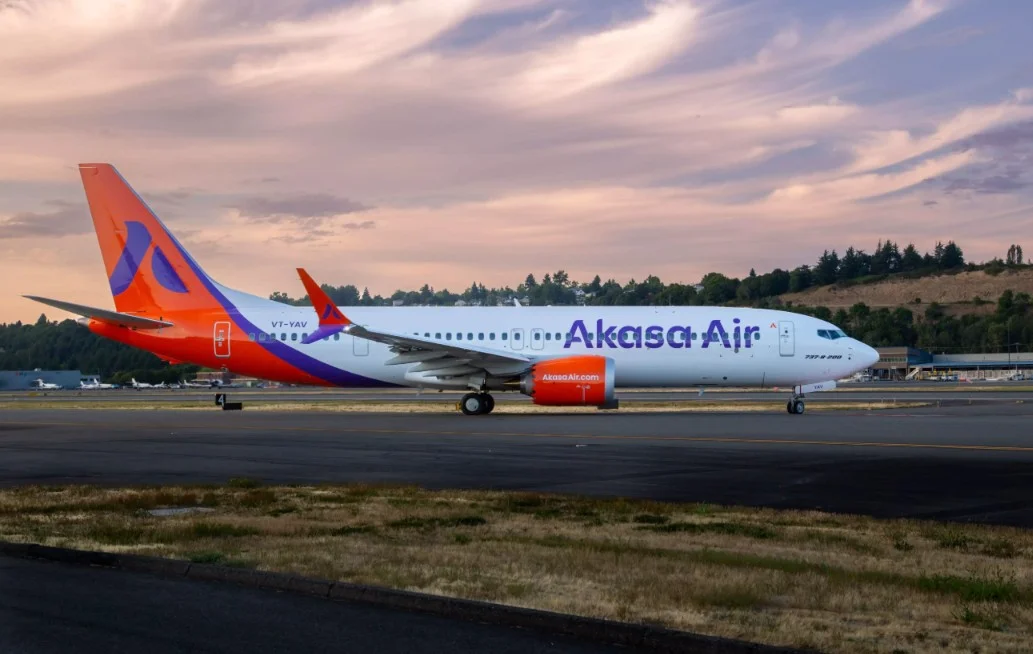
Akasa reportedly operates 45 Boeing 737 MAX aircraft and employs more than 800 pilots. It is also planning pilot bases in Kochi and Kolkata, in addition to its main bases in Bengaluru and Mumbai.
A pilot base is an operational location for crew assignments. Plans for additional bases should not be interpreted as confirmation that those locations are already functioning.
As the network grows, the relationship between aircraft availability and crew deployment becomes increasingly important. Compensation, training and workable rosters all contribute to an airline’s ability to operate its planned schedule.
Akasa began commercial operations in August 2022.
Pay changes do not resolve fatigue concerns on their own
The reported package arrives amid continuing aviation-sector discussions about Flight Duty Time Limitations and pilot fatigue.
Higher compensation and additional leave can improve employment terms. They do not, by themselves, establish that a particular roster adequately manages fatigue.
That assessment also depends on duty timing, consecutive work periods, rest opportunities and how schedules operate in practice.
For pilots, the most useful next detail will be the formal policy: how increases vary across grades, which payments are protected, how flexible patterns affect leave and how the roster cycles are defined.
The reported January changes indicate a broader revision to employment terms. Their practical effect will become clearer when the full compensation and scheduling provisions are available.