
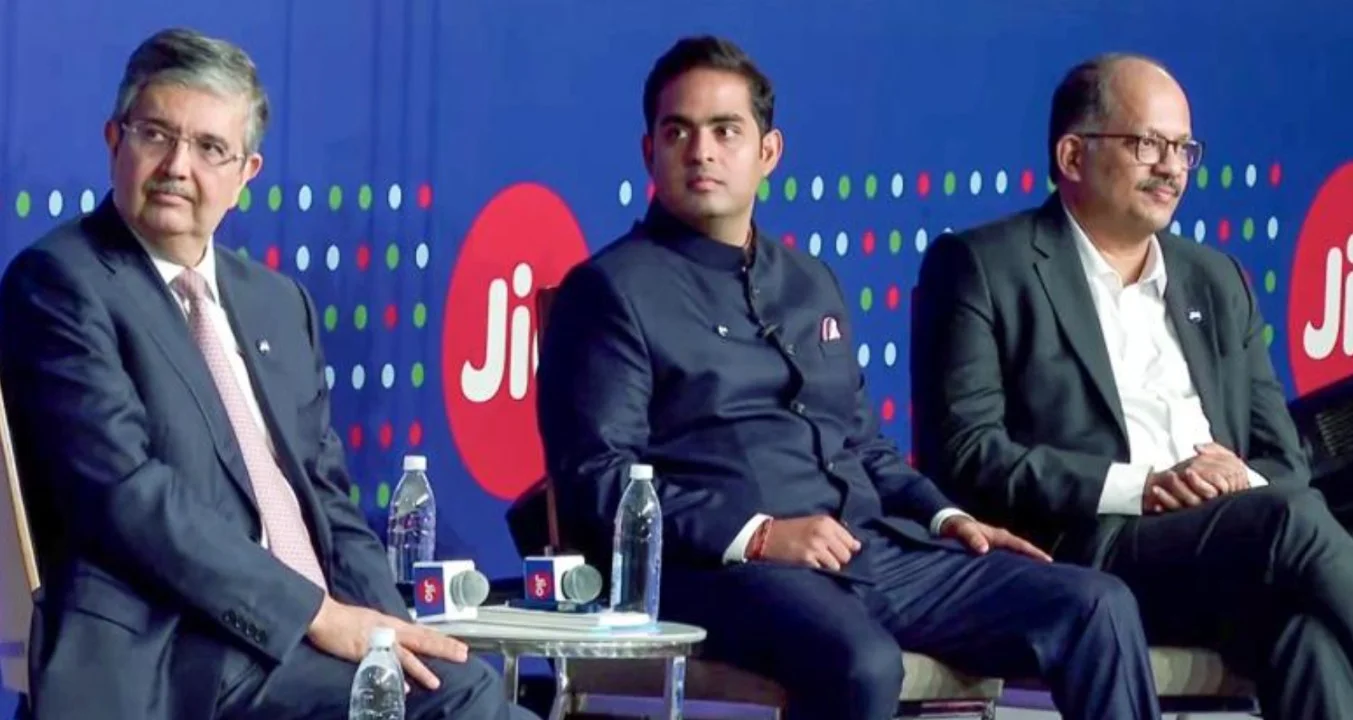

The ₹30,213-crore offering reached 2.35-times subscription by mid-afternoon on October 21. Its rapid opening response highlighted institutional interest, while retail participation developed more gradually.
Jio Platforms’ initial public offering attracted bids worth more than ₹50,000 crore by 2:45 p.m. on October 21, with institutional investors accounting for most of the early demand.
Investors sought approximately 46.50 crore shares against 19.75 crore shares available in the bidding pool, taking subscription to 2.35 times at that point. Published reports said the offer reached full subscription within 100 minutes of opening. These were opening-day, intraday figures rather than the final subscription tally.
Closing update: The bidding window subsequently ended on October 23. Angel One reported final overall subscription of 22.19 times, with the qualified institutional buyer category at 70.55 times.
Institutions dominated the opening response
The opening-day snapshot showed a substantial difference between investor categories.
Qualified institutional buyers, which include eligible investment institutions, had subscribed their allocation 7.09 times. Retail demand stood at 0.58 times, meaning applications had covered approximately 58% of the shares reserved for that category at the reporting time.
| Investor category | Subscription at 2:45 p.m., October 21 |
|---|---|
| Qualified institutional buyers | 7.09 times |
| Non-institutional investors | 1.03 times |
| Retail investors | 0.58 times |
| Employees | 1.15 times |
| Eligible shareholders | 1.12 times |
| Overall | 2.35 times |
Historical intraday figures from the supplied opening-day report. These are not closing subscription levels.
The uneven response illustrates why an overall subscription multiple needs context. Strong demand from one category can lift the total even while another category remains below full subscription.
Retail participation also changed as bidding progressed. Angel One’s closing update put retail subscription at 2.72 times, compared with the opening-day snapshot of 0.58 times.
What the ₹50,000-crore figure actually means
The value of bids is different from the amount a company raises.
Oversubscription means investors have requested more shares than are available. It does not automatically expand the offering or give every applicant the number of shares requested.
Jio’s announced offer comprised up to 27 crore new shares, with a price band of ₹1,065–₹1,119. At the upper end, the stated issue size was ₹30,213 crore. The offer opened on October 21 and closed on October 23.
Those figures describe different parts of the transaction:
| Measure | Meaning |
|---|---|
| Issue size | The amount sought through the offering at the stated terms |
| Bid value | The value of shares requested by applicants |
| Subscription multiple | Shares requested divided by shares available in the relevant category |
| Company valuation | The implied value of the company’s equity at a particular share price |
Keeping these measures separate prevents a large bidding headline from being mistaken for cash received by the issuer.
Fresh shares distinguish the offer from a shareholder sale
The offering was structured as a fresh issue without an offer-for-sale component, according to JM Financial Services’ issue summary.
In a fresh issue, the company issues additional shares and receives the proceeds, subject to expenses and the terms of the offer. In an offer for sale, existing holders sell shares and receive the sale proceeds.
However, describing the issue as fresh capital does not establish that all proceeds are earmarked for AI, cloud infrastructure or other technology expansion.
Choice’s published IPO summary identified repayment or prepayment of certain borrowings of Reliance Jio Infocomm, alongside general corporate purposes, among the stated objectives. Investors should consult the final prospectus for the authoritative allocation and conditions.
Technology ambitions need financial evidence
Jio’s wider digital-services ambitions form part of the investment discussion, but subscription demand does not demonstrate the future profitability of any particular business.
Evaluating cloud, enterprise and AI opportunities requires more than a large connectivity customer base. Relevant questions include how much customers will pay, what infrastructure investment is required and how quickly new services generate operating cash.
For investors assessing the business after listing, useful disclosures include:
- Revenue and profitability across business segments.
- Capital expenditure and future funding requirements.
- Debt, finance costs and cash generation.
- Customer concentration in enterprise services.
- Commercial adoption of newer technology offerings.
These measures help distinguish an addressable opportunity from revenue and profits already being delivered.
Fast subscription does not guarantee listing gains
The reported 100-minute milestone describes the pace of applications. It does not establish the likely trading price after listing.
Likewise, institutional participation is evidence of demand at the offer’s terms, rather than a guarantee that the shares are attractively priced for every investor.
Listing performance can change with market conditions, available supply and investor expectations. Longer-term returns depend on earnings, cash flow and the valuation paid.
The opening response was therefore a notable demand event. The more durable test begins with how effectively Jio uses capital and whether its financial performance supports the expectations reflected in its share price.
Data note: Opening-day figures refer to 2:45 p.m. IST on October 21, 2026. Closing subscription figures refer to October 23. This article provides news and explanatory analysis, not a recommendation to buy or sell securities.