
The investor’s cautious outlook centres on interest rates and concentrated technology valuations. His forecasts remain scenarios rather than confirmed market outcomes.
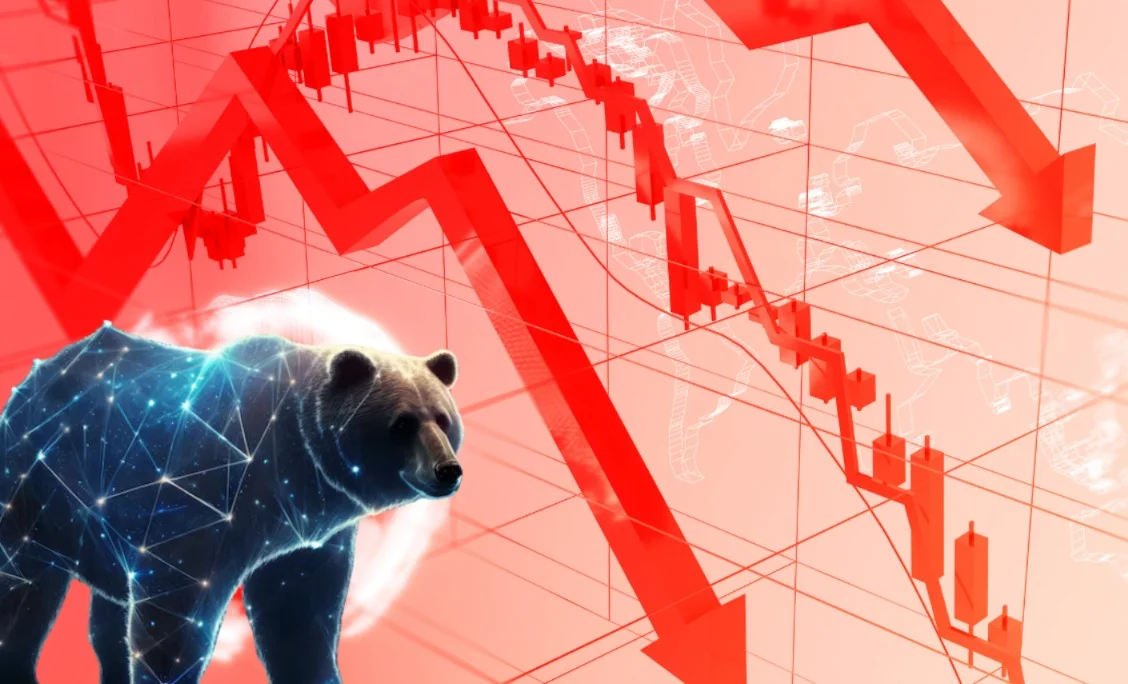
Marc Faber believes Indian equities are in a bear market and favours a more defensive investment approach, according to his interview with Puneet Wadhwa of Business Standard, published on October 21.
The editor and publisher of The Gloom, Boom & Doom Report expressed a preference for cash and US government bonds while questioning the sustainability of highly valued technology shares. His assessment represents an investment opinion, rather than an official classification of the Indian market.
Faber’s argument raises several questions for investors: how much an index reveals about its underlying stocks, whether higher bond yields offer sufficient compensation for risk, and how to judge businesses benefiting from AI spending.
Why Faber is cautious on Indian equities
In the interview, Faber described India’s long-running equity advance as having ended. He argued that rising interest rates had created a more difficult environment for asset prices and did not give a specific percentage target for further Indian market declines.
That distinction matters. A bearish assessment describes an expected direction or market condition; it does not establish the timing, depth or duration of a decline.
Investors also need to distinguish between a broad market statement and the experience of a particular portfolio. Returns depend on the securities held, purchase dates, dividends, transaction costs and the currency used to measure performance.
A period of disappointing index returns does not mean every investor lost money. Equally, a rising benchmark does not mean most stocks performed well.
Index concentration is central to his warning
Faber’s US market concerns focus partly on the influence of large technology companies within major benchmarks. He contends that strength in a limited group of heavily weighted shares can obscure weakness elsewhere.
The underlying mechanism is straightforward. In a market-capitalisation-weighted index, larger companies exert more influence on the index’s movement. Several large constituents can therefore lift the benchmark even when many smaller constituents fall.
This makes market breadth useful alongside the headline index.
Measures such as the number of advancing and declining shares, sector participation and equal-weighted index performance can help show how widely gains are distributed.
However, narrow leadership alone does not establish that a crash is imminent. Large companies may have stronger earnings or different business prospects from the rest of the market. Concentration identifies an exposure that needs examination; it does not supply a reliable market-timing signal.
His preference for Treasuries rests on falling yields
Faber favours US government bonds on the expectation that weaker economic conditions could bring interest rates down and support bond prices.
That outcome is conditional.
An existing fixed-rate bond generally rises in price when comparable market yields fall. If yields rise instead, its market value generally declines. Longer-duration securities are usually more sensitive to those changes.
Investors must also distinguish between three different measures:
| Measure | What it describes |
|---|---|
| Coupon | The bond’s contractual interest payment |
| Yield to maturity | A calculated return based on price and scheduled payments, subject to assumptions |
| Holding-period return | Income plus the price change during the investor’s actual ownership period |
A forecast of a positive Treasury return is therefore not a guaranteed payoff over the next year. The result depends on the bond purchased, its price, subsequent yields and when it is sold.
For an Indian investor, dollar–rupee movements, taxes, costs and access arrangements can further change the return.
Cash offers flexibility, but carries trade-offs
Faber’s defensive approach includes holding more cash.
Cash can reduce exposure to short-term market price movements and preserve flexibility to invest later. Its usefulness nevertheless depends on the instrument used, the return earned and the investor’s future spending needs.
Inflation can erode purchasing power. Staying out of equities also creates an opportunity cost if markets recover before an investor returns.
The relevant question is therefore how much liquidity a portfolio needs, rather than whether a single forecast justifies moving every investment into cash.
AI caution requires company-level analysis
Faber is also sceptical about AI-related technology valuations and sees scope for further weakness in the sector.
That is his assessment. It should not be presented as proof that the AI investment cycle has ended or that every semiconductor, cloud or software business faces the same outlook.
AI-linked companies have different revenue sources, financing needs and competitive positions. A chip supplier, a cloud infrastructure operator and an enterprise software provider can have very different exposure to changes in customer spending.
A useful financial assessment examines:
- Whether customer demand converts into recognised revenue.
- How capital expenditure compares with operating cash generation.
- Whether debt obligations depend on continued rapid growth.
- How concentrated sales are among a few customers.
- What future earnings expectations are already reflected in the share price.
Strong technology adoption and an attractive stock valuation are separate questions. A useful product can still be attached to an expensive investment.
What readers should take from the interview
Faber’s comments present a defensive view of global markets, with particular concern about interest rates and technology concentration.
Assessing that view requires evidence beyond the forecast itself: earnings delivery, valuation changes, market breadth and the direction of bond yields all matter.
His preference for selected assets is also different from a universal allocation suitable for every reader. Investment horizons, liabilities, currency exposure and tolerance for losses vary.
The interview is most useful as a set of arguments to evaluate. Whether those arguments prove correct will depend on developments that remain uncertain.
Source note: This article summarises and analyses Marc Faber’s interview with Puneet Wadhwa of Business Standard. TechLayers did not conduct the interview. Explanatory passages are editorial analysis, not additional statements attributed to Faber.
This article provides news and general financial information, not personalised investment advice.