
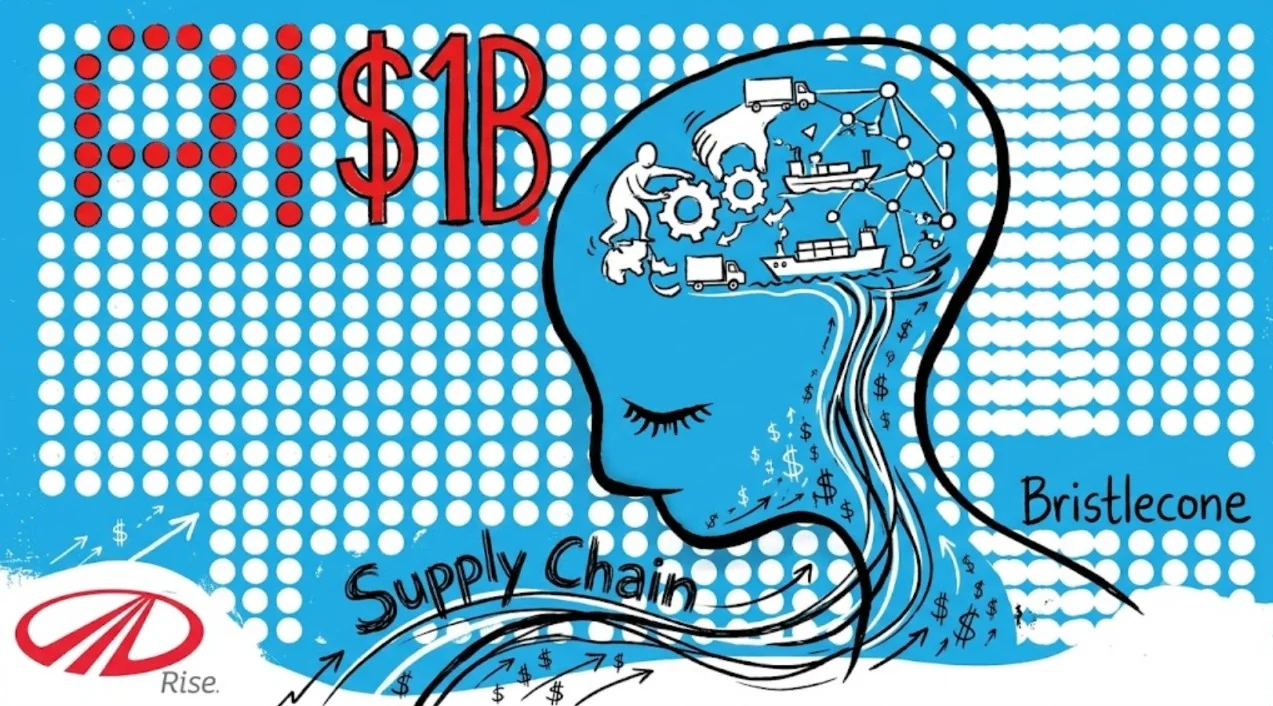

The supply chain technology specialist has reported 24% revenue growth as it expands its capabilities in artificial intelligence, analytics and reusable software assets.
Mahindra Group company Bristlecone is pursuing a $1 billion valuation through a strategy that combines supply chain consulting with artificial intelligence and proprietary technology.
The company has reported 24% year-on-year revenue growth. Its internal programme, Project Unicorn, aims to build a billion-dollar valuation business by FY31, according to a leadership account published by Mahindra. The target remains an ambition rather than evidence of a completed transaction valuing the company at that level.
Bristlecone’s strategy centres on a practical business challenge: helping companies make their supply chains more predictable while reducing the time and effort required to introduce new technology.
Project Unicorn sets the direction
Chief executive officer and managing director Lakshmanan Chidambaram is leading the expansion. Bristlecone’s official appointment announcement confirms that he took charge on July 1, 2025, following a leadership role at Tech Mahindra.
According to PTI reporting published by Rediff, the company has doubled its sales team and broadened its services beyond its established enterprise resource planning supply chain work.
Its expanded offering includes data analytics, AI and software product engineering. The United States is its largest market, followed by Europe and India, Chidambaram said in that report.
The commercial logic is to address more of a customer’s supply chain needs. A company implementing an enterprise platform may also require better forecasting, cleaner data, system integration and tools that help employees respond to disruptions.
Serving those connected needs could create opportunities for additional work. Whether that translates into sustained growth will depend on project execution and customer demand.
Why reusable technology matters
A significant part of the plan involves developing intellectual property, implementation frameworks and accelerators—reusable components that can reduce repeated work across customer projects.
Chidambaram described investment in these capabilities over the next two years, with the objective of shortening implementation times and making the business more dependent on proprietary technology.
The distinction matters for a services company.
When each new engagement requires a largely separate delivery effort, expansion can require substantial additional staffing. Reusable components could allow teams to complete some tasks more efficiently, although customers will still need configuration, integration, testing and support.
That makes the investment an execution challenge as well as a technology initiative. An accelerator must work reliably across different systems and operating environments before it can deliver repeatable savings.
AI projects could open the door to broader assignments
AI is another part of Bristlecone’s expansion, but it should not be confused with the company’s entire business.
In the PTI report, Chidambaram estimated revenue associated with AI interventions at about 10–12% of the company’s topline. He also described AI assignments as smaller than large SAP implementation projects, while potentially creating opportunities for subsequent work.
An initial forecasting assignment, for example, may reveal problems in product data or links between operational systems. Addressing those issues could lead to a wider transformation programme.
That is an explanation of how such engagements can develop, rather than a forecast of Bristlecone’s future contracts.
For customers, the value of an AI tool should be assessed against a defined operating problem. Better forecast accuracy, fewer stockouts or less manual planning work are more useful measures than whether a project carries an AI label.
Supply chain expertise remains central
Bristlecone describes its work as covering supply chain planning, sourcing and logistics. Its stated customer industries include manufacturing, high technology, life sciences, retail and consumer goods. The company is headquartered in San Jose, California, and operates across North America, Europe and Asia.
Those industries face different operating constraints.
A manufacturer may need to manage component availability and production schedules. A retailer must balance product availability against excess stock. A life sciences business has to consider traceability and quality requirements alongside delivery performance.
These differences help explain why industry knowledge remains important when introducing automation. A technically capable model still needs accurate data, appropriate controls and a clear understanding of the decisions it will support.
A valuation target needs more than revenue growth
Project Unicorn establishes a destination, but revenue growth alone cannot determine whether Bristlecone reaches it.
A valuation assessment would also consider profitability, cash generation, customer concentration, growth durability and market conditions. Proprietary technology could strengthen the business if customers adopt it and it produces measurable benefits. Spending on intellectual property, by itself, does not demonstrate that outcome.
The available growth statements do not provide enough information to calculate a defensible current valuation or revenue multiple. The reported percentage increase also needs an absolute revenue base to establish the scale of the business.
The next indicators worth watching are therefore practical ones: evidence of shorter implementations, repeat customer demand, adoption of reusable tools and financial disclosures showing whether growth remains profitable.
Bristlecone’s plan links a clear valuation ambition with a change in how it delivers services. Its progress will depend on turning that investment into reliable customer outcomes and repeatable business performance.